Pulau Langkawi
Langkawi consists of a group of 99 islands located off the north west coast of Peninsular Malaysia. The island is a duty free island where goods such as perfumes, cigarattes, liquor, cosmetics, leather wear and confectionery are sold without duty imposed by the government. Langkawi Mall, Langkawi Fair Shopping Complex and Jetty Point Duty Free Complex are some of the shopping complexes that offer lots of goods for your selection.
Good beaches that you can explore and swim include Kok Beach, Cenang Beach, Tengah Beach and Burau Bay Beach which are all located at the west coast of the main island. Go round the island of Dayang Bunting and experience the cool breeze and breathtaking view of Langkawi.
 If you are for snorkelling or diving, go to Pulau Payar Marine Park which is located 35km south of Langkawi. This island is an ideal place to enjoy the marine life and vegetation that are protected by the marine law of Malaysia until today. You can go to this island for a day trip by boarding a speedboat from Kuah Jetty at Langkawi Island. It takes approximately 1 hour to reach this marine park. Admission fee of RM5/adult and RM2.50/child is charged.
There are many places of attractions in Langkawi that you can visit. Visit the Eagle Square, Ayer Hangat Village (Warm Water Village), Kota Mahsuri (Memorial in honour of Mahsuri) and Oriental Village. Try Langkawi Cable Car and see the spectacular view of the area.
If you are for fishes but are not able to find the time to do your own diving or snorkelling, visit Underwater World Langkawi at Cenang Beach and experience the more than 5,000 types of aquatic life.
If you are for snorkelling or diving, go to Pulau Payar Marine Park which is located 35km south of Langkawi. This island is an ideal place to enjoy the marine life and vegetation that are protected by the marine law of Malaysia until today. You can go to this island for a day trip by boarding a speedboat from Kuah Jetty at Langkawi Island. It takes approximately 1 hour to reach this marine park. Admission fee of RM5/adult and RM2.50/child is charged.
There are many places of attractions in Langkawi that you can visit. Visit the Eagle Square, Ayer Hangat Village (Warm Water Village), Kota Mahsuri (Memorial in honour of Mahsuri) and Oriental Village. Try Langkawi Cable Car and see the spectacular view of the area.
If you are for fishes but are not able to find the time to do your own diving or snorkelling, visit Underwater World Langkawi at Cenang Beach and experience the more than 5,000 types of aquatic life.
Pulau Redang
 Pulau Redang, situated 45km off the coast of Kuala Terengganu, is the largest of all Terengganu's islands. From the very first glance, Pulau Redang will enchant visitors with its compelling beauty. Its incredibly azure waters fringed by white sand, against the backdrop of verdant jungle-clad hills make picture-postcard views.
Pulau Redang archipelago comprises 9 islands, the Lima Island, Paku Besar Island, Paku Kecil Island, Kerengga Besar Island, Kerengga Kecil Island, Ekor Tebu Island, Ling Island, Pinang Island and Redang Island. This archipelago is abounds with marvelous marine fishes, turtles and coral reefs, ensuring a great snorkelling and scuba-diving experience. Redang Island which is approximately 7km in length 6km in width, is the largest of all other islands in the Marine Park.
 Redand Island boasts two beautiful beaches, the Long Beach or locally known as Pasir Panjang, situated on the east coast and Teluk Dalam Kecil, a sheltered cove tucked away on the northeast of the island. Teluk Dalam Kecil is the location of the Berjaya Redang Beach Resort, a five-star accommodation on the island.
Streching over 800m, Pasir Panjang is a dream come true for sun-seekers. Here, underneath the clear blue sky, one can spend hours by basking in the sun, or strolling by the beach and feel the sensation of soft sand sinking under the feet. The beach is lined by a number of resorts overlooking the sea, offering various styles of accommodation.
Pulau Perhentian

Pulau Perhentian is located in the South China Sea 21 km from the coast of Kuala Besut, Terengganut. For hundred of years ago vessel sailing from the south coast of Peninsular Malaysia to Bangkok will stop-by for a rest and shelter at the Island. They all an ancient merchant carrying food, jewelry, vast and etc. As the activities of merchants, sailors and traders from the South of Chinese Sea have taken place, the island is getting popular for their 'one stop station', these Islands were named as 'Once Stop Island' so called 'Pulau Perhentian' in Malay language.
It comprises of two islands; Pulau Perhentian Besar and Pulau Perhentian Kecil. Both islands are surrounded by beautiful palm-fringed powdery white sandy beaches and crystal-clear turquoise-blue sea.
The two Perhentian Islands are rated as some of the most beautiful islands in the world; a virtual paradise for snorkeling (trips cost RM35-60 per person, depending on the duration, stops and whether equipment rental is included or not) and diving in crystal-clear water or just for lazing on one of the white sandy beaches waiting for the coconuts to drop …
The two main islands are heavily forested and ringed with sandy beaches, typical of tropical islands. Accomodation for visitors are predominantly aimed at budget travellers and is mostly on the larger Pulau Perhentian Besar, which not only has wonderful beaches but also forest trails over the hills.
Both islands are separated by a very narrow sound but with strong current. The significant different between the two islands is, Perhentian Besar is more for a vocational island while the small one is an island with the mixture of vacation mood and reality life due to the fishing village, Kampung Pasir Hantu which is resided with more than 2000 villagers and completed with basic facilities apart from resorts and guesthouses.
All manner of aquatic life is visible both near and far from the beach such as turtles, sharks, coral and thousands of tropical fish. The interior is covered by jungle with a wide variety of species. You can watch monitor lizards, monkeys, geckos, flying squirrels, butterflies and many other types - sometimes right in front of your chalet. There are no roads and not many paths, so the islands are mainly peaceful and untouched - so far
Apart from walking, the only way to get around is by sea taxi. Expect to pay around RM 10-25 per person for 5-15 minute transfers.
 Perhentian Besar
As most of Perhentian Besar's interior is covered by virgin tropical jungle, hiking and trekking are there possible recreational pursuits. A luxury resort here can be booked for accommodation .At trip to this lush and exotic tropical island is a must for all nature lovers and those who enjoy scuba diving, snorkelling, deep sea fishing, swimming, wind surfing, sailing, boating and canoeing. Perhentian Kecil
Claimed to be one of the best getaway beaches in the world among travellers and tourist. Long beaches (locally known as Pasir Panjang) prides itself with long stretch of sandy beach of fine sand with crystal clear water up to a depth of 20ft. Calm waters make you feel as you are in a very large swimming pool!
Pulau Pinang(Penang)
 The name "Penang" comes from the modern Malay name Pulau Pinang, which means island of the areca nut palm (Areca catechu, family Palmae). The name Penang may refer either to the island of Penang (Pulau Pinang) or the state of Penang (Negeri Pulau Pinang). In Malay, Penang's capital George Town was called and labelled in old maps as Tanjung Penaga (Cape Penaigre), named after the many ballnut trees (also known as Alexandrian laurels, Calophyllum inophyllum) on the coast, but now usually shortened as Tanjung (the Cape).
 Penang was long the only state in Malaysia where ethnic Chinese formed a plurality, but more recent statistical trends show that the Malay community has surpassed the Chinese in numbers. The percentage of people of Chinese descent in the population is expected to drop to 40.9% by the end of 2010, while the percentage of Malays will increase to 43%. Nevertheless, the Chinese remain more visible because most of them live in the urban areas.
 The Peranakan, also known as the Straits Chinese or Baba-Nyonya, are the descendants of the early Chinese immigrants to Penang, Malacca and Singapore. They have partially adopted Malay customs and speak a Chinese-Malay creole of which many words contributed to Penang Hokkien as well .The Peranakan community possesses a distinct identity in terms of food, dress, rites, crafts and culture. Most of the Peranakan Chinese are not Muslims but practise an eclectic form of ancestor worship and Chinese religion, while some were Christians.They prided themselves as being Anglophone and distinguished themselves from the newly-arrived Chinamen or sinkheh. The Peranakan, however, are almost extinct today due to their re-absorption into the mainstream Chinese community, otherwise being Westernised. Still, their legacy lives on in their distinctive architecture (exemplified by the Pinang Peranakan Mansion and the Cheong Fatt Tze Mansion), cuisine, elaborate nyonya kebaya costume and exquisite handicrafts.
The common languages of Penang, depending on social classes, social circles, and ethnic backgrounds are English, Mandarin, Malay, Penang Hokkien and Tamil. Mandarin, which is taught in Chinese-medium schools in the state, is increasingly spoken.Chinese opera (usually the Teochew and Hokkien versions) is frequently performed in Penang, often in specially built platforms, especially during the annual Hungry Ghost Festival. There are also puppetry performances although they are less performed today.
 Penang, long known as the food capital of Malaysia, is renowned for its good and varied food, and most Malaysians claim that the best food is found here. Penang was recognised as having the Best Street Food in Asia by TIME magazine in 2004, citing that "nowhere else can such great tasting food be so cheap".Penang's cuisine reflects the Chinese, Nyonya, Malay and Indian ethnic mix of Malaysia, but also shows some influence of Thailand. Its especially famous "hawker food", many served al fresco, strongly features noodles, spices, and fresh seafood. The best places to savour Penang's food include Gurney Drive, Pulau Tikus, New Lane, New World Park, Penang Road and Chulia Street. Local Chinese restaurants serve excellent fare too.
Penang is a major shopping destination in the northern region of Malaysia. It has several modern shopping malls offering a wide range of merchandise. Among the more popular ones on Penang island are Queensbay Mall (Penang's largest), Gurney Plaza at the famed Gurney Drive, KOMTAR (Penang's first modern shopping mall) and Penang Times Square (an integrated commercial and residential complex near Komtar). Notable shopping malls in Seberang Perai are Sunway Carnival Mall at Seberang Jaya and Seberang Prai City Perdana Mall at Bandar Perda.
Traditional bazaars such as the Chowrasta Market and Campbell Street, and makeshift open-air night markets known as pasar malam were the precursors to today's shopping malls. They offer goods ranging from modern electronics and textiles to foodstuffs and local produces.
Pulau Tioman
About 36 nautical miles off Malaysia's east coast lies Pulau Tioman or Tioman Island, one of the region's most enchanting holiday spots. Scenic and tranquil, Tioman Island boasts miles and miles of white sandy beaches, swaying palm trees, charming villages and friendly people. Its crystal clear waters teem with spectacular marine life and colourful coral gardens. The twin peaks of Gunung Nenek Semukut provide a prominent landmark to this island, reputed to be one of the most beautiful and idyllic in the world.
According to legend, Tioman Island is the resting place of a beautiful dragon princess, Whilst flying from China to visit her prince in Singapore, this beautiful maiden stopped to seek solace in the crystal-clear waters of the South China Sea. Enraptured by the charms of the place, she decided to discontinue her journey. By taking the form of an island, she pledged to offer shelter and comfort to passing travellers.
Tioman Island is an excellent spot for fun-filled water sports activities. You can go scuba diving, deep-sea fishing, snorkelling, boating, water skiing, windsurfing, or enjoy the beauty of undersea gardens by ridding around the island in a glass-bottomed boat.
Tioman Island is a treasure trove of breathtaking marine attractions. Corals, seashells and limpets, thorny sea urchins, colourful seaweeds and anemones, starfish and a myriad of other aquatic wonders are abundant here. The crystal clear waters make scuba diving and snorkelling in Tioman an experience unlike any other. Other neighbouring islands recommended for scuba diving and snorkelling are Chebeh, Tulai, Renggis, Sembilang, Seri Buat and Gut.
Tioman Island is the ideal spot for nature lovers, Whether at sea or on land, the wonders of nature that greet you are truly astounding and fascinating. Trek across the verdant hill from Tekek to Juara and enjoy the cool waterfalls cascading over moss-coverad rock formations at Mukut, or take a dip in the warm waters dotted with pastel-coloured reefs. Or head to the Marine Park Centre located between Tekek and Air Batang and swim amidst the various species of fishes.
Fishing enthusiasts can enjoy a bountiful catch at Tioman Island, Just hire a boat for a day, anchor outside the Marine Park limits where fishing is permitted. By dusk, you will have a catch large enough for a sumptuous barbecue on the beach. If you want to try something different and challenging, try your hand at deep-sea fishing. Among the species if fishes and crustaceans found here are groupers, morays, tunas, parrotfish, sea-bass, red snappers, stingrays, plaices, soles, cora trouts, blue marlins, squids, cuttlefish, shrimps, crabs, prawns and lobsters.
 When the stress of life's hectic pace gets to you, rejuvenate your mind and body at Tioman Island. Immerse yourself in the quiet and tranquil setting. Relax to the cool, refreshing breeze and soothing waves. Bask in the tropical sun or walk along the shores during sunset to experience the beauty of the island. Popular beaches are found around the villages of Tekek, Genting, Salang, Air Batang and Juara. For golf-lovers, tee off at the 18-hole international-standard golf course set amidst lush tropical greenery. Enjoy the picturesque sight of rustic villages scattered around the island, where the people are charming, friendly and gracious.
Pulau Sipadan
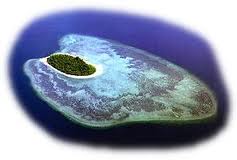 Acknowledged as one of the best diving and unique spots in Southeast Asia, Pulau Sipadan (Sabah)is located off the small coastal town of Semporna on Sabah's eastern coast. Just 15 feet from the beach, the water turns indigo blue as the sea drops abruptly to 2,850ft deep! It is rather awe-inspiring. Myriad of colorful tropical fish swim in the warm water near the surface whereas huge groupers nose about. Moreover, the water gets so dark that one would not really know what lurks below. This famous feature won Sipadan island a "Best Beach Dive in the World" award in 1993.
 The sea is overflowing with marine life. The main attraction for divers is the rich and unique variety of corals both soft and hard. Reef fish of every shape and hue can be found in these waters. Colorful butterfly fishes, angel fishes, damsel fishes of electric blue and bright orange colors inhabit the coral reefs, thus adding to the splendor of the underwater havens.
Between April and September, the Green and Hawksbill turtles will come ashore in droves to nest in the soft golden sands of Sipadan. When you dive during this time, you are bound to encounter these harmless denizens of the deep.

 A beautiful white-sand beach fringes Sipadan but the real beauty of this island is in its waters. The season for diving is from mid-February to mid-December. Visibility ranges from 60 feet to over 200 feet. Several dive spots have even been identified and given exotic names after the variety of corals and marine life that are unique to these spots. There is the "Hanging Gardens", the "Barracuda Point", and the exciting "Turtle Cavern".
Professional diving companies operate on the island, complete with water, electricity, food, drinks, and comfortable accommodation for an unforgettable experience. To get there, one can take the 45-minute boat ride from Semporna.
Pulau Payar
Pulau Payar is one of the many islands off mainland Kedah in the Strait of Malacca. It is situated south of Langkawi, a more famous archipelago. Pulau Payar's status as a marine park offers protection for its diverse marine life. Pulau Payar is also a snorkeling and diving site famous for its corals.
The Pulau Payar Marine Park is situated in the northern part of the Straits of Melaka, 19 nautical miles (35 km) south of Langkawi and encompasses the islands of Pulau Payar, Pulau Lembu, Pulau Segantang and Pulau Kaca which are surrounded by coral reefs. The marine park teems with a fascinating diversity of marine life and vegetation.
Many endangered species of fishes and marine organisms live within the sanctuary. Measuring 2 km long and 1/4 km wide, Pulau Payar is the most popular of the islands as its sheltered waters are ideal are for snorkeling, diving and swimming. Among the enchanting dive spots is the "Coral Garden", an area covered with bright, multi-hued soft corals.
There are several sandy beaches on Pulau Payar island for picnics as well as hiking trails for those who wish to explore the island. Just off the beach, one can indulge in the thrilling experience of feeding baby sharks. Facilities include gazebos, picnic tables, barbecue pits and restrooms at selected areas. There is also a Visitors' Centre that provides information about the marine park.
Visitors can get to Pulau Payar from the Kuah jetty point by catamaran or speed boat. The catamaran services operated by Langkawi Coral, takes about 45 minutes to get to Pulau Payar while the speed boat takes an hour. It is advisable to book the catamaran service a day before the trip. Enquiries can be made with any travel agent in Kuah or at the jetty point for those intending to travel by speed boat. Apart from the fare, a levy of RM5.00 for adults and RM2.50 for children is charged for entry to the marine park.
Things To Do Here
Snorkelling, swimming and scuba diving are the main activities that you can do here. Being a marine park means that most of the marine life and vegetation in the sea are still thriving here. The popular diving site is known as Coral Garden and is located at the south-west of Pulau Payar where you will be able to see the bright and multicoloured soft corals. The fascinating feature of this park is that there are many artificial reefs built from old boats, concrete blocks and tyres that have developed into mature reefs with plenty of sea creatures around them. Visibility on a good day can go up to 15m.
Jungle Tracking is another activity that you can do over here. There are 2 trails that you can use to explore the flora and fauna of Payar Island.
Baby Shark Feeding will be a memorable experience to do for you and your children.
Floating Platform is designed for those who does not want to wet their bodies but still want to enjoy the marine life here. It is a platform called Coral Langkawi which is moored off Pulau Payar. Measuring 49 m by 15 m, you will have to book a package tour in order to have the privilege of using it. It has a tunnel shape chamber at the bottom of the platform 10 feet below the sea. There are also boats which have glass bottom for you to see the marine life and corals as you move along the coral gardens. This platform is also equipped with a snack bar, a dining area and a sunbathing area.
Pulau Pangkor
Pulau Pangkor is a popular island resort which offers fine beaches with a wide range of sun and sea activities such as windsurfing, fishing, and snorkeling. The real attraction here however are the enchanting beaches - marvellous for swimming amidst tranquil surroundings. The modern facilities make it an idyllic gateway. Nearby is the smaller privately owned world renowned island resort of Pangkor Laut.
Pangkor Town
This is basically your one street town and with that one street being called the Main Street or Road. The shops there have an air about them that nothing has changed in the past 20 years.Here there are quaint coffee shops and souvenir shops and others selling sea products such as dried squids and cuttlefish, anchovies, dried pre-packed fish and dried shrimps.

Sungai Pinang Fishing Village
On the east coast of the island, facing the mainland, there's a contionous village strip comprising Sungai Pinang Kecil and Sungai Pinang Besar. The ferry from Lumut stops at before arriving at the Pangkor Jetty. This quaint Chinese fishing villager offers a closer look at life of the average Chinese fisherman and his family. The fishermen's houses are next to the docks and when they return with their daily catch. The womenfolk are ready with knives and baskets to prepare their catch Their catch, which includes small and big fish as well as squid are then dried in the sun and later soaked in a sweet, spicy sauce.The smell here however can be overwhelming, so those with sensitive noses and stomachs, should best avoid these places. This is principally the Chinese part of the island. The Foo Lin Kong Temple is worth a quick look. Located on the side of the hill, the main attraction is a mini Great Wall of China!

The Dutch Fort (Kota Belanda)
At the end of Pangkor Village, at Teluk Gedung, there's a road that leads towards the Dutch Fort - walking distance, some 3kms or so. If you're unsure, just ask the locals for directions. The Dutch Fort was built in 1670 as a strong point and a tin store.
The Dutch attempted to monopolise the lucrative tin trade but despite the presence of the fort, smuggling of tin continued. Disgruntled local leaders frequently attacked by a local warrior, Panglima Kulab, and his followers, eventually led the Dutch to abandon the area in 1690. In 1743, the fort was rebuilt and was made into a garrison for 600 Dutch soldiers. Today, the Museum Department has reconstructed the Fort and it stands in its original foundations.

Batu Bersurat (Tiger Rock)
On the right of the fort there is a little path leading into, what seems like a dead end. This is the entrance into a secluded area called Tiger Rock. Batu Bersurat (inscribed stone) - also known as Tiger Rock due to the etching found on this huge granite boulder.
The rock measures about 10.7m long and 4.6m wide and stands at 4.3m tall, and today, there is a pavillion built to shelter it. The etchings shows the picture of a tiger carrying away a child. There are also two round-shaped leaves, and the letters "If Carlo 1743" and "VOC". The "VOC" probably refers to the Dutch East India Company.
There are several theories about the inscription. One sinister version of the tale claimed that the Malays and Bugis kidnapped and murdered a Dutch dignitary's son in 1743, in revenge of the ill treatment of the the Dutch to the locals. When the Dutch looked for the boy, the locals made up a story that they saw the boy was snatched by a tiger. In comemorate to such incident, the Dutch soldiers etched such inscription.
 Ciku looks similar to a kiwi fruit except it has smooth, non hairy but rusty skin. Ciku is granulated and yellowish to pinkish brown in colour when it is ripe. It can be oblong or round in shape depends on the species. Ciku found in Terengganu is always oblong and light brownish in the flesh.
 Many people confuse Cempedak with Jack fruit. They both look similar from the outer skin except cempedak is smaller and with stronger smell than jack fruit and it is a seasonal fruit. The flesh of cempedak is softer and smaller with orangey yellow. It is eaten in raw but more commonly deep fried.
 Perhaps everybody will agree that watermelon is the best choice to cure your thirst in a hot sunny day. It produces so much sweet and pleasantly scented juice that can easy your throat in a second.