Showing posts with label Cultures. Show all posts

Thursday, March 17, 2011

Batik

Batik is a medium that lies somewhere between art and craft, and is believed to be at least 2000 years old.


The Batik Process
The technique of batik is a demanding one. In general, the final design must be conceived before the picture is begun. The batik artist works intimately with color; if he wishes parts of his design to be light yellow, for example, all these parts must be waxed at the same time before any subsequent dyeing. He cannot isolate one part of his design and complete it before moving on to the others as an artist in oils or watercolor may; he must create his design in stages, each of which encompasses the whole picture.


The basic process of batik is simple. It consists of permeating an area of fabric with hot wax so that the wax resists the penetration of dye.


If the cloth we begin with is white, such as bleached cotton, linen, or silk, then wherever we apply hot wax that area will remain white in the final design. After the first waxing the fabric is dipped into a dye bath whose color is the lightest tone of those to be used. When the piece has dried, we see an area of white and an area of cloth that is the color of the first dyeing. Wax is now applied to those parts in which we wish to retain the first color, and the entire fabric is immersed in the second dye bath whose color is darker in tone than the first. This process is repeated until the darkest tone required in the final design has been achieved. When the fabric, now almost wholly waxed, has dried it is placed between sheets of absorbent paper and a hot iron applied. As the sheets of paper absorb the wax they are replaced by fresh sheets until the wax is removed. At this point the final design is seen clearly for the first time.


Materials for Batik
The tools and materials used in batik are simple and readily available.


Any tool that can efficiently transfer hot wax from a container to the fabric will serve to produce a design on cloth when it is dyed. At the simplest level, a lighted candle can be used to distribute drops of melted wax on the fabric. A variety of objects such as bent wire or the rim of a tin can, can be dipped in melted wax and pressed onto the cloth to make a design. However the serious artist uses the brush. The best to use is about a Number Twelve water-color brush. The brush needs to have a large enough tip to retain a good quantity of wax. A larger brush for waxing out large areas of cloth is very useful as is a small brush-a Number Six is about as small as one can use-for delicate work.


The selection of waxes is important to the quality of the finished batik. Paraffin and beeswax are the two waxes most commonly used in batik and are usually combined in different proportions.


Because of its ready availability the best fabric for most batiks is cotton. The weave of the cloth should not be too close, and the fabric should be translucent when held in front of a light. For the best results, the fabric to be waxed should be stretched on a frame in a taut manner to prevent wrinkles which may cause the wax to run in an unpredictable way.


Wax is an inflammable substance, so the wax container should not be placed directly on the source of heat. It should sit in boiling water, and care should be taken to see that the water is replenished as it evaporates.


As with painting, color is an integral part of batik. A painter uses pigment; a batik artist uses dyes. The Painter can, if he chooses, completely obliterate an undesirable color by covering it with another color. Perhaps he must wait until the unwanted color is dry, but there is no doubt about it, he has another chance, he can cover up his mistake.


In batik the correction of mistakes, in most cases, is impossible. The Painter is not limited in any way in the variety of colors he uses and juxtaposes. In batik, however, each color used is significantly changed by the proceeding color; or at least it is certainly affected by the color "underneath". The only pure color is the first one, so all other colors used are mixtures, determined largely by the first color, or the first strong color.

Saturday, March 12, 2011

Malaysian Indian Cuisine


Teh tarik, a well-loved drink amongst Malasyians.
  • Banana leaf rice is white rice served on banana leaf with an assortment of vegetables, curry meat or fish and papadum.
  • Chapati is a type of bread originated from Punjab. It is made from a dough of atta flour (whole grain durum wheat), water and salt by rolling the dough out into discs of approximately twelve centimeters in diameter and browning the discs on both sides on a very hot, dry tava or frying pan (preferably not one coated with Teflon or other nonstick material). Chapatis are usually eaten with vegetable curry dishes, and pieces of the chapati are used to wrap around and pick up each bite of the cooked dish.
  • Fish head curry - a dish where the head of a fish (usually ikan merah, or literally "red fish"), is semi-stewed in a thick curry with assorted vegetables such as okra and brinjals.
  • Thosai (in Johor Bharu spelt Dosai) is a batter made from lentils and rice blended with water and left to ferment overnight. The batter is spread into a thin, circular disc on a flat, preheated pan, where it is fried with a dash of edible oil or ghee until the dosa reaches a golden brown colour. Then the thosai may optionally be turned over on the pan, and partially fried. The end product is neatly folded and served. Thosai is served with sambar (vegetable curry) and coconut chutney.
  • Idli is made from lentils (specifically black lentils) and rice — into patties, usually two to three inches in diameter, using a mold and steamed. Most often eaten at breakfast or as a snack, idli are usually served in pairs with chutney, sambar, or other accompaniments.
  • Payasam - A popular dessert, payasam is an integral part of traditional South Indian culture.
  • Pongal - rice boiled with milk and jaggery, it also shares the same name as the harvest festival which is celebrated every January. The name itself is derived from the fact that pongal (the dish) is cooked in the morning and offered to the gods, thanking them for the harvest.
  • Putu Mayam (String hoppers/ Idiyappam) is a sweet dish of rice noodles with coconut and jaggery as main ingredients. It is served with grated coconut and jaggery, or, unrefined block sugar. In some areas, gula melaka (coconut palm sugar) is the favourite sweetener. Putu piring is a version of putu mayam in which the rice flour dough is used to form a small cake around a filling of coconut and brown sugar. The homemade version in Malaysian Indian homes tend to be eaten as a savoury accompaniment to curried dishes or dal.
  • Rasam, lentil soup with pepper, coriander and cumin seeds
  • Sambar, a thick stew of lentils with vegetables and seasoned with spices.
  • Upma/Uppittu, prepared from semolina (rava), onion, green chillies, and certain spices.
  • Roti canai is a thin bread with a flaky crust, fried on a skillet and served with condiments. It is sometimes referred to as roti kosong. In Singapore, it is referred to as prahta. Roti telur is a roti canai with egg in it. Telur means egg.
  • Mamak rojak is a variant of rojak consisting of substantial ingredients like boiled potatoes and hard-boiled eggs. Also known as 'pasembur'.
  • Maggi goreng is a dish of fried Maggi instant noodles with flavouring (usually curry), vegetables, egg, tofu and occasionally chicken.
  • Murtabak is a dish of savoury stuffed roti, usually including minced mutton, garlic, onion, and folded with an omelette, and is eaten with curry sauce.
  • Nasi Beriani or Biryani is a rice dish from the made from a mixture of spices, basmati rice, meat/vegetables and yogurt. The ingredients are ideally cooked together in the final phase and is time-consuming to prepare. Pre-mixed biryani spices from different commercial names are easily available in markets these days, which reduces the preparation time though the taste differs considerably.
  • Teh tarik literally meaning "pulled tea", is a well-loved drink amongst Malaysians. Tea is sweetened using condensed milk, and is prepared using out-stretched hands to pour piping hot tea from a mug into a waiting glass, repetitively. The higher the "pull", the thicker the froth. The "pulling" of tea also has the effect of cooling down the tea. Teh tarik is an art form in itself and watching the tea streaming back and forth into the containers can be quite captivating.

Malaysian Chinese Cuisine


Hainanese Chicken Rice (Chinese : 海南雞飯) in Malacca which the rice is served in the form of rice balls.

  • Bak Kut Teh (Chinese : 肉骨茶) (pork ribs soup). A soup cooked with herbs, garlic and pork ribs which have been boiled for many hours. The city of Klang is famous for it. In some towns, additional ingredients include sea cucumber and abalone. Bak kut teh is believed to have medicinal properties.
  • Bakkwa (Chinese : 肉干), Known also as barbecued pork and it literally means dried meat. This delicacy is sold everywhere throughout Malaysia and is especially popular during the Chinese New Year celebrations period.
  • Bread with curry chicken, chicken cooked in curry with a covering of bread. Found in the town of Kampar.
  • Cantonese Fried Mee. (Chinese : 廣府炒, 河粉, 鴛鴦) Deep fried thin rice noodles served in a thick white sauce. The sauce is cooked with sliced lean pork, prawns, squids and green vegetables such as choy sum. It is one of the common Chinese foods in Malaysia.
  • Chai tow kway (Chinese : 菜頭粿) is a common dish in Malaysia and Singapore, also known as fried radish cake, it is made of rice flour and white radish.
  • Char Kway Teow (Chinese : 炒粿條,炒河粉). Stir fried rice noodles with prawns, eggs (pork or chicken), chives and beansprouts. Usually, with an option of cockles as well.
  • Chee cheong fun (Chinese : 豬腸粉) is square rice sheets made from a viscous mixture of rice flour and water. This liquid is poured onto a specially-made flat pan in which it is steamed to produce the square rice sheets.
  • Curry Mee (Chinese : 咖喱面). A bowl of thin yellow noodles mixed with beehoon (rice vermicelli) in spicy curry soup with coconut milk with dried tofu, prawns, cuttlefish, chicken, mint leaves and topped with a special sambal.
  • Duck noodle soup (Chinese : 鸭腿面线) is famous in Penang food stalls, ingredients include duck meat in hot soup with mixed herbals and slim white noodles mee-sua.
  • Fuzhou cuisine can be found in the Sitiawan area, as well as several cities and towns in Sarawak. Specialities include Kong piang.
  • Ginger Duck Mee (Chinese : 姜鸭面). Egg noodles cooked with duck stew. The duck is stewed with ginger in black sauce. This dish is available only from selected restaurants in Kuala Lumpur and the Klang Valley as the duck stew can be cumbersome to prepare.
  • Hainanese Chicken Rice (Chinese : 海南雞飯). steamed chicken served with rice cooked in margarine or chicken fat & chicken stock and chicken soup. The rice is usually served in a bowl or a plate but in Malacca (a historical town), the rice is served in the form of rice balls.
  • Hakka cuisine can be found throughout the country, as there is a substantial Hakka community within the greater Chinese population. Yong tau foo (Chinese : 酿豆腐) is a stuffed tofu dish with Hakka origins but is now popular Malaysians of all races, and is particularly associated with . As a localiazed adaptation, brinjals, lady fingers, fried tofu, bitter melon and chillies are also stuffed with the same meat paste used for the original version.
  • Hokkien Mee(Chinese : 福建麵). A dish of thick yellow noodles fried in thick black soy sauce and pork lard which has been fried until it is crispy. This dish is served mostly in Kuala Lumpur, Seremban, Klang, Kuantan and Penang.
  • Hokkien Mee or Hae Mee or Prawn Mee (Penang) This is a bowl of yellow mee and meehoon (rice noodles) served in soup boiled from prawns, boiled egg, kangkong vegetable and chilli.
  • Kaya toast or Roti bakar is a traditional breakfast dish. Kaya is a sweet coconut and egg jam, and this is spread over toasted white bread. Traditionally served with a cup of local coffee/tea and soft-boiled eggs in light/dark soya sauce & ground white pepper.
  • Kway chap (Chinese : 粿汁), Teochew dish of rice sheets in dark soya soup, served with pig offal, tofu derivatives and boiled eggs.
  • Loh Mee (Chinese : 滷麵). A bowl of thick yellow noodles served in a thickened soup made from egg, flour, prawn, pork slices and vegetables.
  • Mee Hoon Kor (Chinese : 面粉粿)
  • Ngah Choy Kai (Bean sprouts chicken) of Ipoh (Chinese : 芽菜雞) is similar to Hainanese chicken rice. The steamed chicken are served with light soya sauce flavoured with oil and with a plate of beansprouts. This dish is favoured by all Malaysians.
  • Ngah Po Fan Also known as Claypot Rice/Sha Po Fan(Chinese : 瓦煲雞飯 or 沙煲饭) is a claypot chicken rice dish. It is basically chicken rice cooked over high heat in copious amount of soy and oyster sauce. Dried salted fish is optional but highly recommended.
  • Pan Mee or Ban Mian (Chinese : 板面) is a Hokkien-style egg noodle soup, some forms of Ban mian, comprises hand-kneaded pieces of dough, while others use regular strips of noodles.
  • Pao (Chinese : 包) also known as bao, is a steamed bun made of wheat flour, with fillings of various types of meat. It is usually a menu item found in Dim Sum places, although these days it can be seen in most coffee stalls.
  • Popiah (Chinese : 薄饼), Hokkien/Chaozhou-style rolled crepe spring roll style , stuffed mainly with stewed vegetables, usually shredded tofu, turnip and carrots. Other items may also include egg, Chinese sausage ("lup cheong").
  • Rojak (Malay Influenced: 水果囉喏). A fruit salad with a topping of thick dark prawn paste and some sliced fried 'yau cha kwai'. The Penang version is particularly popular and well regarded.
  • Sin Chow (Singapore) Fried Meehoon (Chinese : 星洲米粉). Rice noodles stir fried with various ingredients such as barbecued pork, fish cake, carrots etc. Some restaurants may use different ingredients but the noodles should have the distinct Sin Chow Fried Rice Noodle taste. Popular in Kuala Lumpur and surrounding areas. The American Chinese version uses curry powder. Interestingly, this dish did not originate from Singapore.
  • Turmeric chicken (黄姜鸡) is a chicken stew cooked with from a blend of bases mashed into a paste, consisting fresh turmeric, ginger and lemongrass.
  • Tau foo fah or Dau Huay (Chinese : 豆腐花 or 豆花) is a curdled version of soya bean milk and is flavoured with syrup. It looks much like Tau Foo but it is very tender. Sold in many places. It is a popular dessert among Malaysians and Singaporeans.
  • Tong Sui (Chinese : 糖水), Chinese dessert with a lot of variety. Basically a sweet drink with different ingredients such as black beans, sea coconut, yam, sweet potato, longan and others.
  • Vegetarian dishes (Chinese : 素食, 斎) In some towns in Malaysia, there are vegetarian restaurants that serve vegetarian dishes which resembles many meat dishes in look and even taste although they are made solely from vegetarian ingredients. You can get vegetarian roast pork, steamed fish with skin and bone, chicken drumstick complete with authentic looking bone, etc.
  • Wonton Mee (Chinese : 雲吞麵), Chinese noodles with Chinese dumplings (Chinese : 雲吞), chooi sam and BBQ pork . Dumpling are usually made of Pork and/or prawns. The noodles may be served either in a bowl of soup with dumplings or on a plate with some dark soya sauce flavoured with oil and slices of roast pork and vegetable. For the latter, the dumplings will be served in a separate bowl with soup.
  • Wu Tau Guo (Chinese : 芋頭糕), is yam cake that is made of mashed yam and rice flour. It has deep fried onion and shrimp on top, and usually served with red chilli paste.
  • Yau Zha Gwai or Eu Char Kway or You Tiao (Chinese : 油炸鬼 or 油条) is Cantonese doughnut, a breakfast favourite eaten either like a doughnut—with coffee, or as a condiment for congee. It is shaped like a pair of chopsticks, stuck together. The name itself amusingly translates into "greasy fried ghosts".
  • Zuk or zhou (Chinese : 粥) is congee, a rice porridge that comes with such ingredients as fish slices, chicken breast, salted egg, century egg and minced pork. Mui is the teochew version of rice porridge, and is usually more watery with visible rice grains. It is often cooked with sweet potato and served with an assortment of Chinese dishes like vegetables, meat and salted egg.
  • Duck Roaster (Chinese : 烧鸭) is a duck roaster. The famous duck roaster located in Lunas, Kulim
    .

Malay Cuisine


Nasi lemak - rice steamed with coconut milk

  • Apam balik - also called "Terang Bulan" or "Martabak Manis" in Indonesia, it is a bread like puff with sugar, corn, and coarse nut in the middle.
  • Ayam percik - grilled chicken with spicy sauce.
  • Ayam goreng kunyit - deep fried chicken, marinated in a base of turmeric and other seasonings.
  • Gulai - a type of soupy curry-like dishes that could be made from various ingredients; meats or vegetables. Popular one are Gulai Kambing (Goat or mutton gulai) and Gulai Ayam (chicken gulai).
  • Kari - the Malay adaptation of curry dishes. Just like Gulai, it could be made from various ingredients; meats or vegetables. Popular one are Kari Ayam (chicken curry).
  • Ikan bakar - grilled/bbq-ed fish with either chilli, kunyit (turmeric) or other spice based sauce.
  • Ikan pari - barbecued stingray
  • Ikan asam pedas - A sour stew of fish (usually mackerel), tamarind, chili, tomatoes, okra and Vietnamese coriander (Malay: daun kesum).
  • Kangkung belacan is water spinach wok-fried in shrimp paste (belacan) and hot chilli peppers. Various other items are cooked this way, including petai (which is quite bitter when eaten raw; some older generation Malays still eat it as is) and yardlong beans.
  • Keropok lekor, a specialty of the state of Terengganu and other states on the east coast of Peninsula Malaysia, is a savoury cake made from a combination of batter and shredded fish. Sliced and fried just before serving, it is eaten with hot sauce.
  • Kuih (plural: kuih-muih) is usually a selection of cakes, pastries and sweets eaten as a snack during the morning or during midday, and are an important feature during festive occasions. It is a tradition shared by both the Malay and the Peranakan communities. Some example include:
    • Onde onde - small round balls made from glutinous rice flour with pandan [screwpine] leaves essence, filled with palm sugar and rolled in fresh grated coconut.
    • Kuih talam - steamed layered coconut pudding made of rice flour, sago flour and coconut milk is cooked by steaming. Pandan leaves lends aroma and the green color to one layer. A white coconut layer goes on top.
    • Pulut inti - a kind of steamed 'dry' rice pudding made from glutinous rice & coconut milk. It is traditionally wrapped in banana leaves folded into a pyramid shape, and topped with fresh grated coconut sweetened with palm sugar.
  • Lemang - Glutinous rice and coconut milk and cooked in a hollowed bamboo stick lined with banana leaves.
  • Mee rebus - a famous noodle dish which consists of mee (noodle, salt and egg) served with a tangy, spicy and sweet potato-based sauce. It is sometimes also called mee jawa, perhaps as a nod to its Javanese origins.
  • Nasi lemak - rice steamed with coconut milk
  • Nasi berlauk - Plain rice served with different variety of dishes
  • Nasi dagang - the Nasi Lemak of east coast Peninsula Malaysia, in the state of Terengganu and Kelantan.
  • Nasi kerabu - a type of rice which is blue in colour (dyed by a kind of blue flower), originated in Kelantan state.
  • Nasi paprik - originated from southern Thailand, rice with "lauk", typically chicken.
  • Nasi goreng - fried rice. Nasi goreng kampung is a typical variant, traditionally flavored with pounded fried fish (normally mackerel), though recently fried anchovies are used in place of it.
  • Satay - Satay were originated from Java and Sumatra in Indonesia, and distributed widely across Southeast Asian archipelago. It is widely popular and common within Indonesian cuisine with rich variations and recipes. Malay chicken satay is closely resembled Madura satay with rich peanut sauce. In Malaysia the most popular variant are Kajang Satay.
  • Soto - The most popular is Soto Ayam, chicken soup with rice vermicelli and ketupat, it clearly shows Indonesian cuisine influences.
  • Pulut - Glutinous rice is a type of short-grained Asian rice that is especially sticky when cooked. It is widely used during the Raya festive seasons as traditional food.
  • Ketupat - a type of glutinous rice dumpling that has been wrapped in a woven palm leaf pouch and boiled. As the rice cooks, the grains expand to fill the pouch and the rice becomes compressed. This method of cooking gives the ketupat its characteristic form and texture. Usually eaten with rendang (a type of dry beef curry) or served as an accompaniment to satay or gado-gado. Ketupat is also traditionally served by Malays at open houses on festive occasions such as Idul Fitri (Hari Raya Aidilfitri).
  • Rendang - a spicy meat stew originating from the Minangkabau ethnic group of Indonesia, and adopted by Malay throughout archiplego. Rendang is traditionally prepared by the Malay community during festive occasions.
  • Roti jala - The name is derived from the Malay word 'roti' (bread) and 'jala' (net). A special ladle with a five-hole perforation used to make the bread looks like a fish net. It is usually eaten as an accompaniment to a curried dish, or served as a sweet with 'serawa'. Serawa is made from a mixture of boiled coconut milk, brown sugar and pandan leaves.
  • Sambal belacan sambal a common codiment in Indonesian cuisine as well as Malaysian cuisine. It is made with chilies, shallots, garlic, stewed tomatoes, tamarind paste, coconut sugar, salt and belacan (shrimp paste).
  • Sambal sotong - squid are cooked in a sambal-based sauce, made with chilies, shallots, garlic, stewed tomatoes, tamarind paste and belacan.
  • Sayur lodeh - a stew of vegetables cooked in a lightly spiced coconut milk gravy.
  • Sup kambing - a hearty mutton soup slow simmered with aromatic herbs and spices, and garnished with fried shallots and fresh cilantro.
  • Serunding - Shredded meat in a form of meat floss with spices.
  • Tempoyak - a popular Malay delicacy. It is durian extract which is preserved and kept in an urn. Commonly eaten with chillis and other dishes.

Thursday, February 24, 2011

Unique Festival In Malaysia (Volume 2/2)

AUGUST
Hari Raya Puasa
Celebrated by the Muslims signifies the end of the fasting season of Ramadan for a month. The celebration is determined by sighting of the new moon. This is the most significant celebration for the Muslims. Muslims starts the day by congregating in the mosques early in the morning to perform Hari Raya Puasa prayers followed by visits to the graves of the departed. 

This festive occasion is greeted with great joy, the young will ask for forgiveness from their elders and everyone will put on new clothes. Open house or invitation for relatives and friends to come to their house is practised. Plenty of traditional Malay delicacies are served during this festive season. Houses are thoroughly cleaned and decorated with the lighting of oil lamps to welcome the angels which is believed to be visiting the earth during the seven days preceding the festivall. The celebration lasts for a month which the celebration is concentrated in the first three days.


SEPTEMBER
Moon Cake- Lantern Festival


Known also the mid-autumn festival which falls on the 15th day of the eighth Chinese Lunar Calendar. This is a historical festival rather than a religious one. It marks the successul rebellion against the Mongol ruler dated back in 14th century China. Legend has indicated that the secret about a plot against the Mongolians was hidden inside the mooncake and the mooncake was distributed widely. Lanterns were used at night as signals from higher grounds and hilltop. Today, this festival is celebrated with moon cakes and latern hanging on the house. The lantern and the moon cakes have attracted many children and adults attention. In certain area, lantern procession and competition are held.


OCTORBER
Hungry Ghost Festival
Celebrated on the 15th day of the seventh lunar month by Buddhists and Taoists. Bundle of joss sticks, paper hell money, and food placed on the street corner and roadsides are burnt to appease the dead spirit from entering their home and cause disturbance in their household. It is   believed that the gate of the hell are opened and all the hungry ghosts   wander the earth in search of food and taking revenge to those who has   wronged them in life. Legend has it that two childhood sweethearts   forbidden were rejected marriage by their parents, committed suicide by   jumping from the Yu Lan Bridge. A single stalk of lotus bearing two   flowers under the bridge was found several days later.

Deepavali
Celebrated on the Hindu month of Kartik in October / November. It is also called the Festivals of Lights. The celebration symbolises the victory of Lord Krishna over the demon king Narakasura. It marks the return of Rama after 14 years of exile. On this day, the Hindu wake up at dawn, bathe themselves in herbal oil, put on new clothes, and say their prayers. Homes of the Hindus are lit with little oil lamps made from clay pots filled with coconut oil and wicks. This is believed to invite Lakshmi, the goddess of wealth who will not enter an unlit house.


NOVEMBER 
Hari Raya Haji
Celebrated by the Muslims on the tenth day of the last month of the Muslim calendar. This is an occasion celebrated marking the conclusion of the annual Haj - the pilgrimage to the holy city of Mecca, when the pilgrims are given the title of Haji for men and Hajjah for women. Thanksgiving prayers are offered in the mosques. An animal is sacrificed whose meat was distributed among the relatives and the poors.


Awal Muharram Maal Hijrah
Celebrated by Muslims as the day symbolises two happy event in a Muslim's life. The start of Muslim year or calendar, Muharram, coincides with Prophet Muhammad's journey from Mecca to Medina on the first of Muharram in 622AD. To signify this occasion, Muslims attend to various religious activities, spiritual singing, religious meeting throughout the country.


DECEMBER
Christmas
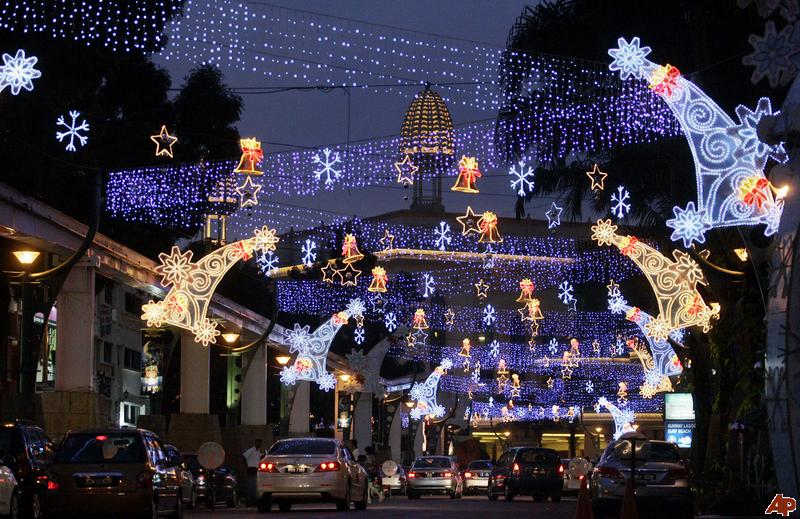
Celebrated by Christian on the 25th of December marking the birth of Jesus Christ. It is celebrated by non-christian in some other ways as well. It is a family gathering occassion starting with a midnight mass on Christmas Eve followed by Christmas Day celebration the next day. Legend has it that the Santa Claus brings presents for people at night during the christmas eve. Exchange of gifts are popular. Roast turkey is a common and traditional dish.

Unique Festival In Malaysia (Volume 1/2)

OVERTURE 
Malaysia is a country of multi-ethnic society practising multi-culturalism and multi-religion. Each ethnic group practises its own religion and belief which means various festivals are celebrated throughout the year. These festivals are usually celebrated either nationwide or at state level. "Open house" concept is practised almost all the festivals, which means inviting relatives and friends to partake in the food and festivity occasion. Some of these festivals are public holidays.


JANUARY

New Year Day

National Public Holiday, New Year's Eve is usually celebrated by the urban community throughout Malaysia with lively parties to usher in the New Year. Sporting events, competitions, exhibitions and cultural performances by Malaysian multi-ethnic groups are held in various states.


Thaipusham
Celebrated by Hindus on the tenth month of the Hindus calendar. It is believed on this day the stars, Pusan and Brihaspati are united into one. It is a celebration of the birthday of Lord Subramaniam, also known as Lord Muruga, the youngest son of Lord Shiva. Before this day, Hindus usually prepare themselves by fasting, dieting on certain food and maintaining self-discipline. A huge procession of penitents in an atmosphere electric with drumming and chanting. Skewers fastened metal hooks, spikes on their body including tongues, cheeks and nipples defying all sense of pain. A fire walking ceremony is also demonstrated in some temples.


FEBRUARY
Chinese New Year
Celebrated on the first day of the Chinese Lunar Calendar, this is the most important annual festival for the Chinese community. Each year is named after one of the 12 animals according to the Chinese Zodiac.Houses are cleaned and decorated to prepare for the big day. 


Debts are settled, prayers and offerings are made. New clothes are bought and plenty of food are prepared.

Family members from far come back for the gathering. New year cards are exchanged between friends and relatives. A reunion dinner for the family is held on the eve of the new year.Bad language and unpleasant topics are discouraged. 


There are lion dances and small fire works. Red paper showing Chinese characters of prosperity and wealth are pasted either in front or inside the house. Ang-Pow or red packet containing money is given out to children and elderly. Open house is practised for visiting relatives and friends with various ethnic races. The new year is lasted for fifteen days which the concentration is on the first three days. The celebration ends with the Chap Goh Mei on the fifteenth day.


Chap Goh Mei

In Hokkien dialect, it means the 15th night of Chinese New year. It is celebrated with prayers and offerings to mark the end of the Chinese New Year. Houses are again brightly decorated with lights for the last day of the celebration. Legend has seem young unmarried women throwing tangerines into the sea hoping to find a good husband. After this day, business as usual and everyone is looking forward for the next Chinese New Year.


MAY
Wesak Day
Celebrated around May by Buddhists which marks three momentous events in Buddha's life - his birthday, enlightenment, and achievement of Nirvana. The celebration begins at dawn when devotees gathering at the temples to meditate on the Eight Precepts. Donations, giving food to the needy, offerings of incense, joss sticks and prayers are carried out. The sutras are chanted in unison by monks in saffron robes. The celebration is highlighted by a candle procession.


Harvested Festival
Celebrated by the Kadazan of Sabah each May with thanksgiving dedicated to the rice gods. Agricultural shows, exhibitions, cultural programmes, buffalo races, and other traditional games are held. There is much merrymaking and feasting with rice wine flowing freely throughout the festivities. 


JUNE
Hari Gawai
Celebrated on the first of June by the Dayaks or Ibans of Sarawak for a week marking the end of the paddy harvesting season and the beginning of the new planting season. There is singing, dancing and considerable drinking of tuak or rice wine in the local longhouses. The Ibans working outside their village returned to the village for the celebration. There are plenty of food and certainly not shortage of entertainment and wine in the local way.